Yes, laser therapy works for back pain, but results depend on your diagnosis and how it is used. Class IV laser therapy reduces inflammation and calms pain signals, making it most effective when paired with a structured rehab program.
Now, I’d like to be clear on one thing: It is not a standalone fix for structural issues like spinal stenosis, however it does stand out as an effective accelerator for tissue healing and repair – which makes it an excellent adjunct to a complete physical therapy program.
What makes laser therapy treatments so helpful for things like back pain? Most back injuries are an accumulation of issues that come from wear and tear on your joints, muscles, ligaments and tendons. But the real reason people often struggle to recover from these injuries is that the structures of the back often have limited blood flow to them. Enter Class IV laser treatments. The class IV laser is backed by research to provide increased blood flow (among other important metabolic changes) to help you heal.
If you are managing a disc injury or chronic stiffness that limits movement, you need a non-invasive solution that actually delivers. At Primal Physical Therapy, we use lasers to amplify and accelerate healing signals. It’s not a magic cure, it’s a scientifically backed tool that uses light waves to stimulate your body’s natural healing processes – using a process called photobiomodulation. Effectiveness depends on your diagnosis, the dosage delivered, and whether it is paired with a comprehensive rehabilitation plan.
This guide gives you the clarity to decide if laser therapy fits your specific needs for recovery. We cover:
- How laser therapy helps back pain by stimulating cellular tissue repair.
- What the research suggests for sciatica, radiculopathy, and chronic pain.
- Why the distinction between Class III cold laser and Class IV high-intensity laser matters.
- Who is least likely to respond and known contraindications.
- Typical out-of-pocket costs and what insurance or Medicare usually covers.
The Science of Light: How Laser Therapy Works for Back Pain
Most patients assume medical lasers work by melting tension, but the real science is photobiomodulation (PBM). This process uses specific wavelengths of light to improve blood flow and trigger a chemical response in your cells without cutting or burning tissue. This process is similar to a more familiar term called photosynthesis which is what occurs when plants utilize sunlight for energy production and growth .
Laser therapy supports recovery through three primary mechanisms:
- Pain Modulation: The light waves stimulate the nervous system and calm down sensitized pain pathways for symptomatic relief.
- Circulatory Support: It stimulates local blood flow and alters inflammatory signaling to support healing and recovery from inflammation due to acute or chronic injuries.
- Tissue Recovery: It enhances cellular metabolism to support the body’s processes that are required for healing on a cellular level.
PBM does not realign the spine or physically reverse a structural disc bulge or stenosis. It enhances your body’s own ability to repair itself, which allows you to improve your tolerance for the movement and corrective exercises required for lasting recovery.
Why do results vary? Dose and target tissue are the whole game. Treating a deep-seated nerve root requires different energy parameters than a superficial muscle strain. This precision is what laser therapy at Primal means: a data-driven adjunct tailored to your specific diagnosis within a one-on-one treatment plan.
Does Laser Therapy Treatment Work for Back Pain? The Evidence vs. Reality
Research indicates laser therapy often leads to 20% to 30% improvements in pain and disability scores, specifically when paired with a structured rehabilitation program. It is rarely a standalone fix. Effectiveness depends heavily on which clinical category your back pain falls into:
- Non-specific Low Back Pain: For both acute and chronic stiffness, laser provides a temporary window of symptom relief that allows you to restore range of motion and rebuild your posture so you can return to living your pre-back pain life.
- Sciatica and Disc-Related Symptoms: Evidence suggests lasers can reduce pain down the leg (radicular pain) by settling local inflammation around the nerve root. It acts as a support tool to help you tolerate the mechanical loading required for disc health.
- A booster for healing: Laser excels at amplifying your body’s abilty to access the cellular requirements for healing structures like muscle, bone, and tendon. It is also excellent for controlling inflammatory issues that can get in the way of exercising and being active such as arthritis, fractures, ligament sprains and muscle strains.
Conflicting evidence online usually comes down to dosing and equipment. Many studies use underpowered Class III lasers or incorrect treatment parameters that fail to reach deep spinal tissues. Studies also measure different outcomes, such as immediate pain relief versus long-term return to sport.
At Primal, we use high-intensity Class IV technology to make sure the energy reaches the target tissue. Lasers create a window of opportunity, and we use that window to address the underlying movement problem.
Class III vs. Class IV: Why the Laser Type Matters for Your Back
Two patients with identical lumbar disc herniations can have completely different outcomes based on the laser used. One spends thirty minutes under a low-power cold laser with no change; the other receives a targeted five-minute high-intensity session and finds immediate relief. Consumers often lump all lasers together, but the technology varies significantly in power and depth.
The distinction comes down to classification:
- Class III (Cold Lasers): These output less than 0.5 Watts. They work for superficial issues like skin wounds but often lack the energy to reach deep spinal tissues.
- Class IV (High-Intensity): These deliver significantly more power in shorter windows, allowing energy to penetrate deep into the musculoskeletal system. Our particular laser has a range that reaches up to 40 Watts of power.
For back pain, depth and dose are the essential levers. A Class IV device can penetrate several centimeters of muscle and fat to reach a nerve root. A Class III device may never deliver a therapeutic dose at that depth.
When comparing clinics, use this checklist to confirm you are getting clinical-grade care:
- Is it Class IV? This is typically required for deep lumbar targets.
- What is the session length? Higher power allows for efficient, five to ten-minute applications.
- Is it integrated? Confirm the laser is paired with manual therapy or exercise, not used as a standalone treatment.
At Primal, our protocol uses high-intensity devices because reaching a deep lumbar target requires precision. Raw power only translates to healing when applied by a clinician who understands proper dosing and movement mechanics.

When Does Laser Therapy Work Best for Back Pain?
Laser therapy is powerful but not a universal fix. It is most effective for specific clinical presentations where inflammation or muscle guarding prevents recovery. High responders typically include:
- Irritable, non-specific low back pain where pain severely limits movement.
- Acute muscular strains and protective guarding patterns.
- Radicular presentations (sciatica) where symptom modulation and inflammatory control around the nerve is needed to begin active rehabilitation.
- Inflammatory conditions like arthritis, or disc herniations.
- Chronic injuries that have had impeded healing due to poor blood supply, such as Degenerative Joint Disease or Degenerative Disc Disease.
While Laser therapy addresses many of the symptoms of the above issues effectively, it does not replace a diagnosis.
At Primal, we believe you should start with a plan that uses a tool like laser to facilitate healing, BUT is paired with a comprehensive treatment plan to restore your movement and posture so to correct the underlying issues, instead of just temporarily improving your pain and limitations. .
In short, Laser creates a vital window of relief, but a progressive loading plan that addresses the root cause is what takes short term relief to long term recovery and restoring your ability to be active.
The Laser Therapy Experience: Sensation, Safety, and What to Expect
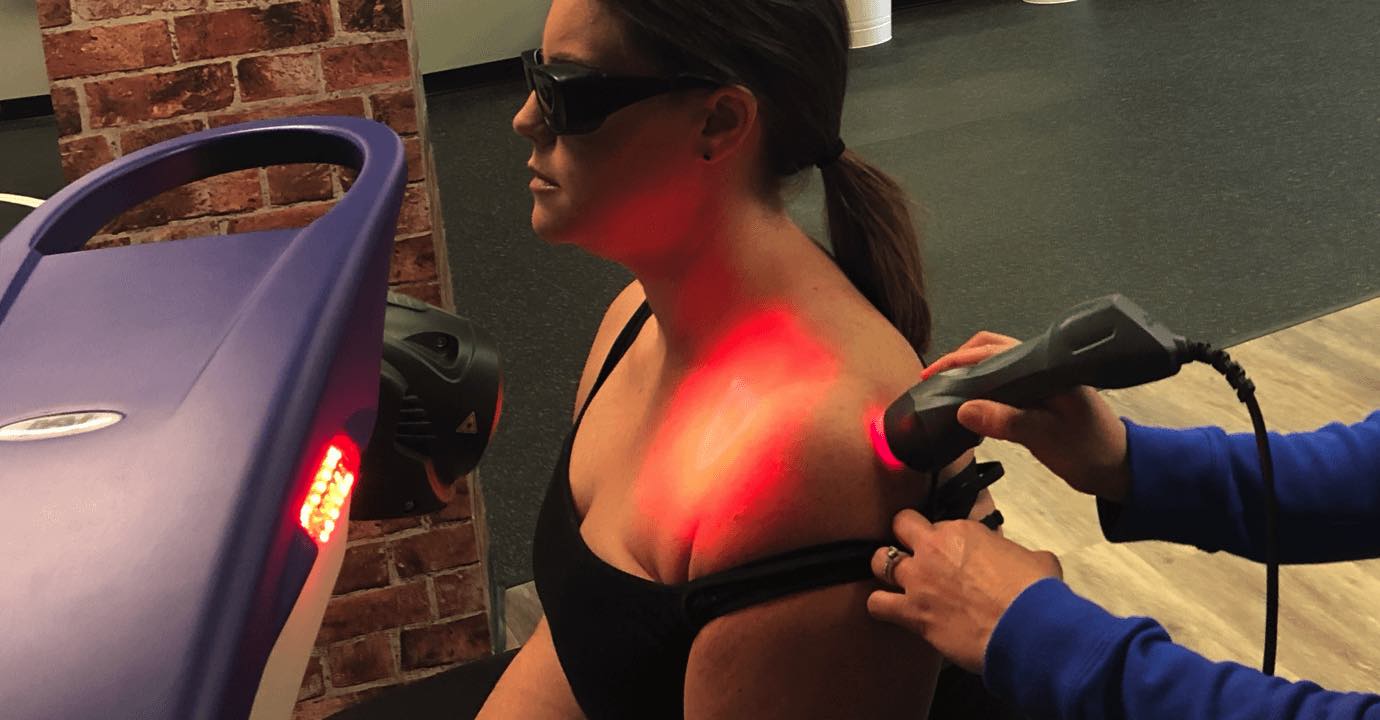
Many patients arrive at Primal wondering if the device hovering over their back will sting or interfere with surgical hardware. The actual experience is painless. You will feel a soothing, localized warmth or no sensation at all as the clinician targets specific regions while you rest comfortably.
To judge if laser therapy treatment will work for your back pain, we recommend a full trial of six to eight sessions. The biological effects of lasers are cumulative, so we reassess your progress after this initial series to identify meaningful trends in mobility and comfort. For lasting change, we always pair lasers with manual therapy or corrective exercise.
This integrated approach makes sure PBM is applied effectively across different tissues, whether bone or muscle. Most metal implants are safe to have laser over them, but pacemakers and neurostimulators require careful screening based on specific device guidance. If you have tattoos in the treatment area, contact your provider first, as ink can get absorbed due to the laser light faster. There are ways to work around tattooed areas, but this is something that might be good to consider prior to booking your laser session.
At Primal, you are screened one-on-one so the laser is used as a precise tool rather than a cookie-cutter add-on. Book a consultation to find out whether a laser is the right fit for your recovery.
Is Laser Therapy the Right Strategy for Your Back Pain?
Laser therapy is a recovery multiplier, not a standalone fix. It suppresses inflammation to create a vital window for corrective movement. Before starting treatment, use this decision framework:
- Confirm your diagnosis: Laser works great fornon-specific back pain, muscular guarding or spasms, and radicular symptoms like nerve root injuries and sciatica, and degenerative and inflammatory conditions of the spine.
- Commit to a trial: Biological benefits are cumulative. Plan for a series of 6 to 10 sessions rather than one-off visits. We recommend stacking the sessions for best results, aiming for a minimum of 3 sessions per week.
- Verify the technology: Make sure the provider uses a high-intensity Class IV laser to reach deep spinal structures.
- Use as an adjunct: Pair laser alongside active rehabilitation and professional movement analysis.
- Screen for safety: Check for contraindications such as being on a steroid for any reason (injectable or oral) .
- Value alignment: Confirm the cost makes sense relative to your expected functional goals.
If you are unsure of your pain’s root cause, start with a professional assessment. Those near Philadelphia can schedule a consultation with Primal Physical Therapy to build a plan that prioritizes movement drivers and long-term recovery.
Frequently Asked Questions
How much does laser therapy for back pain cost per session?
A single session typically costs between $50 and $150 depending on the laser class and your location. Prices are often lower when bundled into a comprehensive physical therapy plan. Many clinics offer multi-session packages to reduce the cost per visit while making sure you complete the full therapeutic protocol.
Does insurance cover laser therapy for back pain?
Most private insurance plans and Medicare do not currently cover laser therapy for back pain. These payers often classify the treatment as elective or investigational. Coverage varies by policy, so check with your insurance provider and clinic to confirm expected out-of-pocket costs before starting.
How many laser sessions does it take to know if it is working?
Plan for a trial of 6 to 8 sessions before drawing conclusions. Measure success by functional improvements, such as increased walking distance or sitting tolerance, not just pain scores. If no progress appears after eight visits, your clinician may recommend a different approach.
Are at-home cold laser devices worth it for back pain?
At-home cold lasers are generally underpowered compared to professional equipment. They are not worth the investment in my experienced opinion. The lack of the depth needed to treat deep spinal issues is a major limitation of cold lasers. A clinic-grade Class IV laser is typically required to deliver a therapeutic dose to the lower back’s deeper structures.
Can laser therapy help sciatica or a herniated disc?
Laser therapy can reduce the inflammation and nerve sensitivity associated with sciatica or herniated discs. It works by creating a chemical environment that supports natural healing and reduces irritation around the nerve root. While it is not a structural fix for a disc bulge, it can significantly improve mobility during recovery.
Is laser therapy safe over tattoos or metal implants?
Laser therapy is safe for metal implants but requires precautions over tattoos. Darker inks absorb light energy more rapidly, which may cause heat sensitivity or skin irritation. Local experts, such as the team at Primal Physical Therapy, perform detailed screenings and adjust laser settings for your specific hardware and skin.
Getting Back to What Matters
Laser therapy treatment works for back pain when it is used correctly: right class of device, right dosage, and right rehab plan behind it. For patients dealing with sciatica, disc-related symptoms, or muscular guarding, it can be a genuine turning point in recovery. The key is pairing it with active rehabilitation rather than treating it as a standalone solution.
Primal Physical Therapy uses DPT-level clinicians and evidence-based protocols across our Bryn Mawr and King of Prussia locations. If you are ready to find out whether laser therapy fits your back pain, schedule a consultation today.
